
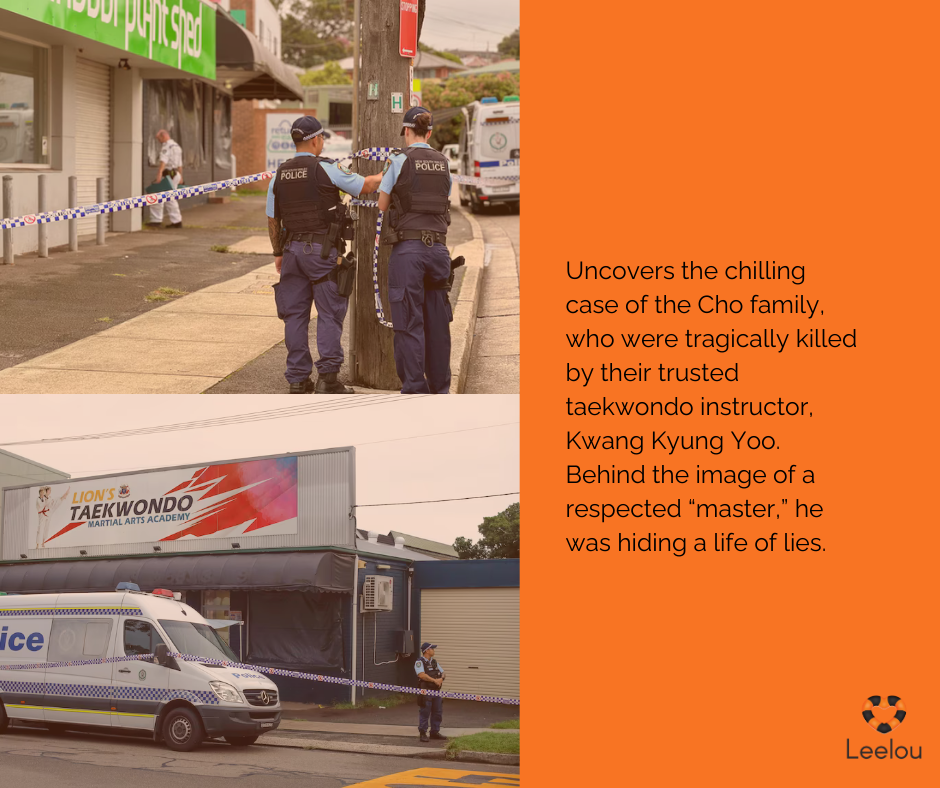
Sometimes the stories that shake us most are the ones that feel impossible to understand.
The murders of Min Cho, her husband Steven, and an innocent child in Western Sydney have left an entire community heartbroken — and a family shattered beyond repair.
The man responsible was someone they knew. Someone trusted. Someone who taught children. Someone who hid lies behind a carefully constructed self-image.
This tragedy is not only devastating — it’s a stark reminder of how danger can come from places we’d never expect.
And it’s why Leelou exists: to give people a way to reach help fast, especially when danger is hidden behind trust, familiarity, or silence.
A Family Destroyed, A Community in Mourning
In court, victim impact statements revealed the unbearable grief left behind:
- Parents whose “lives have been utterly destroyed”
- A brother who can’t understand how life goes on
- A family drowning in pain, confusion, and loss
These aren’t just headlines; these are real people who woke up one day to news that changed everything.
The victims were described as kind, optimistic, always smiling. Their dreams, their contributions, and their legacy deserve to be remembered with dignity.
And the question that lingers for many is: How could something like this happen?
When Danger Comes From Someone You Know
Many people think danger looks like a stranger, a dark alley, a distant threat.
But research and lived experience tell a different story:
Most violent incidents happen at the hands of someone known.
Many crimes begin with manipulation, lies, or hidden intentions.
People often don’t realise the danger until it’s too late.
In this case, the offender lived a life built on lies — fake degrees, false claims of wealth, fabricated success stories, and a pattern of grandiose fantasy.
Behind the charisma was debt, desperation, and internal instability.
For many victims of violence, the person who harms them is someone they once trusted.
And that is what makes early awareness and rapid support so crucial.
How Leelou’s Mission Connects to Stories Like This
Leelou can’t change the past. But it can change the past of the future. Tragedies like this reaffirm exactly why the platform was created:
1. To provide fast access to help when danger escalates unexpectedly
Violence isn't always predictable. Sometimes it happens suddenly, triggered by one moment.
Leelou’s SOS system can alert trusted Guardians within seconds when something feels off or unsafe.
2. To give victims a silent and immediate way to reach help
Not every situation allows for a phone call.
Not every victim can shout.
Not every person recognises danger until it escalates.
Leelou’s silent alerts, instant GPS tracking, and quick activation give people another option.
3. To support communities by keeping people connected in real time
When someone feels afraid, uncertain, or senses something wrong, having a way to instantly notify loved ones can be life-saving.
Leelou exists so that no one has to face fear alone.
We Cannot Predict Every Threat — But We Can Prepare for Them
Stories like this remind us:
- People can hide their struggles
- Violence can come from familiar places
- Lies can mask instability
- And danger can unfold within moments
We can’t always prevent tragedy.
We can’t always understand motives.
But we can take steps to ensure that when a person feels unsafe, overwhelmed, or uncertain…
they’re never disconnected from the people who care about them.
A Commitment to Safety, Awareness, and Human Connection
Leelou wasn’t built to replace emergency services. It wasn’t built to create fear.
It was built for one reason: To protect people in moments where fear steals your voice, danger feels close, and help feels far away.
We honour the Cho family by acknowledging their pain and by continuing to build tools that help others avoid being isolated in their darkest moments.
We believe in a world where:
- loved ones can be notified instantly
- support is always one tap away
- no one faces danger alone
- communities look out for each other
This is why Leelou exists — to turn fear into connection, uncertainty into action, and isolation into support.